Whether you are developing a new seasoning or updating an existing food product’s label, an important consideration is the claims, certifications, and symbols to include on the label. Label claims and symbols that indicate certifications are visual elements that communicate product attributes, attract consumer segments, and enhance product sales.
What claims can be made, and what symbols can be used on a seasoning label? Let’s start with some definitions and then delve into the specifics of various claims and certifications and how they impact your product’s marketability.
Claims
These are statements about a product’s attributes or benefits, such as “low sodium” or “all natural.” Government agencies often regulate claims to ensure they are not misleading. Claims do not require payment to or certification by a governing body.
Certifications
These are granted by governing organizations after a product or process has been evaluated and meets specific standards. Certifications usually come with a symbol or logo (e.g., USDA Organic, OU Kosher) that signifies compliance with the standards set by certifying bodies. (Fig 1) There are costs associated with certifications as defined by the certifying body.

With these definitions in mind, let’s explore some standard certifications and claims and understand their implications for your product.
Claims and Certifications on Labels
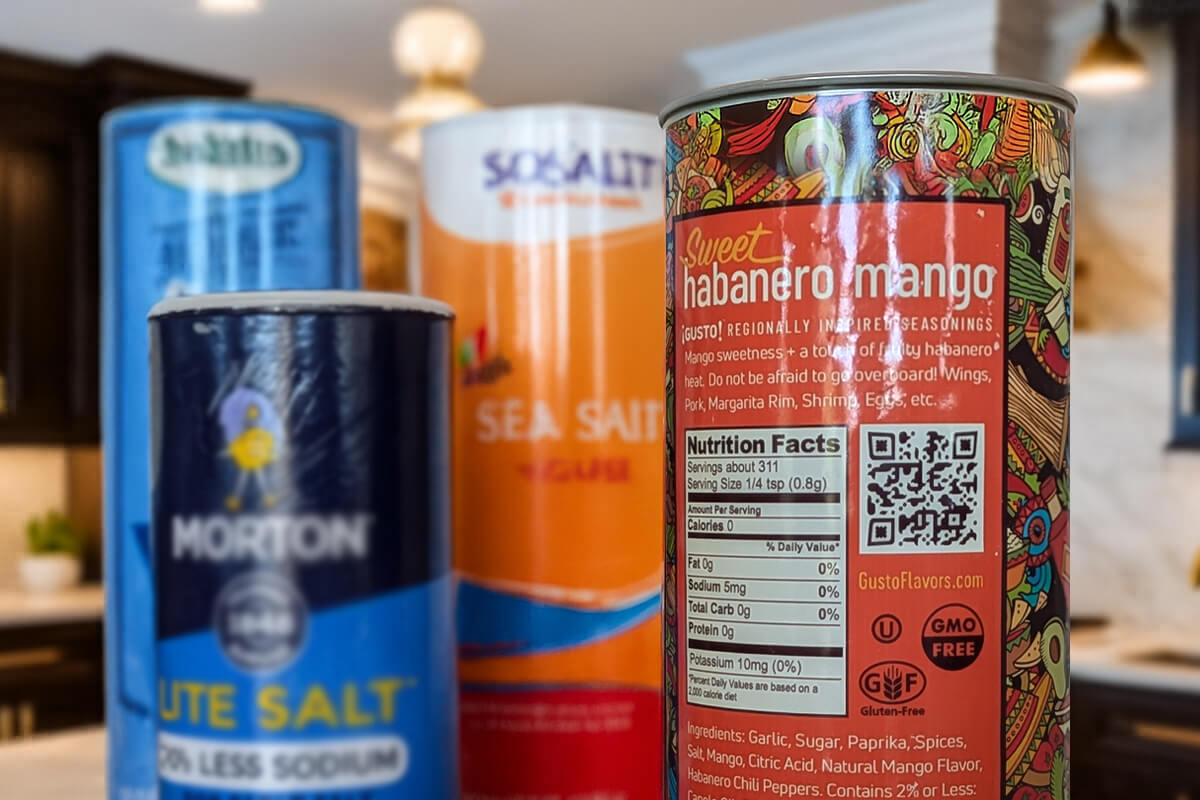
In addition to claims and certifications, labels often include a Nutrition Facts Panel (NFP). An NFP, which you’ve probably seen on the label of nearly every retail food item, provides detailed information about the product’s nutrient content, including calories, fats, proteins, and vitamins. The U.S. Food and Drug Administration (FDA) requires Nutrition Facts labeling on most food products sold in the United States, whether they are produced domestically or imported.
Seasoning blends may be exempt from FDA nutrition labeling requirements if they contain “insignificant” amounts of all nutrients required to be included on the NFP. An NFP is necessary if a nutrient or health claim, such as “low sodium” or “low fat,” is made on the label. Vanns Spices can help determine whether an NFP is required, and we can generate an NFP for your blend.
Let’s explore some standard claim and certification options for seasoning labels.
Common Label Health Claims
All Natural
“All-natural” products should not contain synthetic flavors, colors, or preservatives.
No Preservatives
The product does not contain added chemicals. Without preservatives, the product relies on its natural properties or packaging methods to stay fresh.
Non-Irradiated
The product has not been exposed to ionizing radiation, which is sometimes used to kill bacteria or extend shelf life. Non-irradiated products are processed without this treatment, relying on alternative sterilization methods such as Ethylene Oxide (ETO) or steam.
No MSG
Monosodium glutamate (MSG) is a flavor enhancer often added to foods. This claim indicates that the product does not contain MSG. This is particularly relevant for those sensitive to MSG or who wish to avoid it in their diet.
No Added Salt
The product contains no added salt. The product is formulated without adding salt, which can be important for those managing blood pressure or heart conditions. It may use alternative flavoring ingredients.
No Added Sugar
The product contains no added sugars or sweeteners. Sugar-free products use alternative sweeteners or flavorings or are formulated without sugar. This helps avoid the extra calories and potential health issues associated with sugar consumption.
Non-GMO (just written on the package, no certification)
This refers to a label claim, not a non-GMO certification, which is covered in the next section. The term “non-GMO” indicates that the product is made from ingredients that have not been genetically modified. This self-declared claim cannot include a “Non-GMO Verified” certification symbol from a certifying body.
Vegan
The product contains no animal products and is not processed using animal-derived substances. Suppliers must provide documentation proving that no animal products were used in the production or processing of the material.
Keto-friendly
A keto-friendly product aligns with the ketogenic diet and is low in carbohydrates and fats. The ketogenic diet aims to induce a state of ketosis in the body, where it burns fat for fuel instead of carbohydrates. Keto-friendly products are formulated to be low in carbs and high in fats, sometimes with moderate protein. They typically avoid sugar and high-carb ingredients, opting for alternatives such as low-carb sweeteners or high-fat ingredients.
Made in the USA
The product was manufactured or processed within the United States. It may include ingredients or spices from sources outside the U.S., but manufacturing and packaging occur in the USA.
Low Sodium
- The product contains 140 mg or less of sodium per 100 g
- The FDA allows a “low sodium” claim if the product meets a specific threshold of 140mg or less of sodium per 100 g.
- If the product meets these conditions without the benefit of special processing, alteration, formulation, or reformulation to lower its sodium content, it is labeled to clearly refer to all foods of its type, not merely to the particular brand to which the label attaches.
Common Certifications
Kosher Certification
Kosher certification ensures that a product complies with Jewish dietary laws. This certification is required if you sell to markets with a significant Jewish population.
Kosher certification requires an audit by a rabbi from a kosher certification agency. Almost all our ingredients at Vanns are already kosher. We submit custom blend formulas to the Orthodox Union (OU) for approval and certification.
Organic Certification
Organic certification confirms that a product is made from ingredients grown without synthetic pesticides, GMOs, or artificial fertilizers. It also ensures strict adherence to organic farming practices.
Certification involves a detailed review by a certifying body such as Oregon Tilth. It also requires thorough documentation from the field to the final product, including annual audits and traceability records.
Products labeled “Organic” must contain at least 95 percent organic ingredients. The label must contain an ingredient list that identifies the organic and non-organic ingredients in the product and the name of the organic certifier.
Halal Certification
Halal certification adheres to Islamic dietary laws, particularly concerning how livestock is prepared and slaughtered.
It involves compliance with religious regulations and often requires oversight by a qualified certifying body.
Non-GMO Certification
This certification ensures a product does not contain genetically modified organisms (GMOs).
While not all non-GMO claims are officially certified, organizations like Food Chain ID offer certification that can help differentiate your product.
Gluten-Free Certification
Although the FDA does not regulate the use of gluten-free claims, the term indicates that a product contains less than 20 PPM of gluten.
Vanns does not offer formal gluten-free certification, but you can label your product gluten-free if it meets the FDA’s criteria.
Navigating the world of claims and certifications can be a complex process. Understanding what can be claimed and what certification options can be used will allow for more effective product marketing.
Whether you want to secure kosher certification, explore organic products, or make health claims, each step involves careful consideration and compliance with industry requirements. (Fig 2)
Vanns Spices can assist throughout the product development process by offering claim options and facilitating the necessary certifications, enabling you to position your product in the market and increase sales.
Not sure where to start? We’ll walk you through the process — from brainstorming to finished product — and help you avoid the common pitfalls. Start a conversation with us.
Ask Alejandro!

Have a question or comment about something you just read? Send me a message and let me know how I can help you.
Message Me