
Most discussions of the MIND Diet focus on leafy greens, berries, and fish, but spices may be one of the most overlooked tools for cognitive health.
Traditionally viewed as flavor enhancers, spices are increasingly being studied for their bioactive compounds, linked to reduced inflammation and improved brain function.
The MIND Diet is a hybrid of the Mediterranean Diet and the DASH Diet (Dietary Approaches to Stop Hypertension), two well-known diets that have gained significant attention.
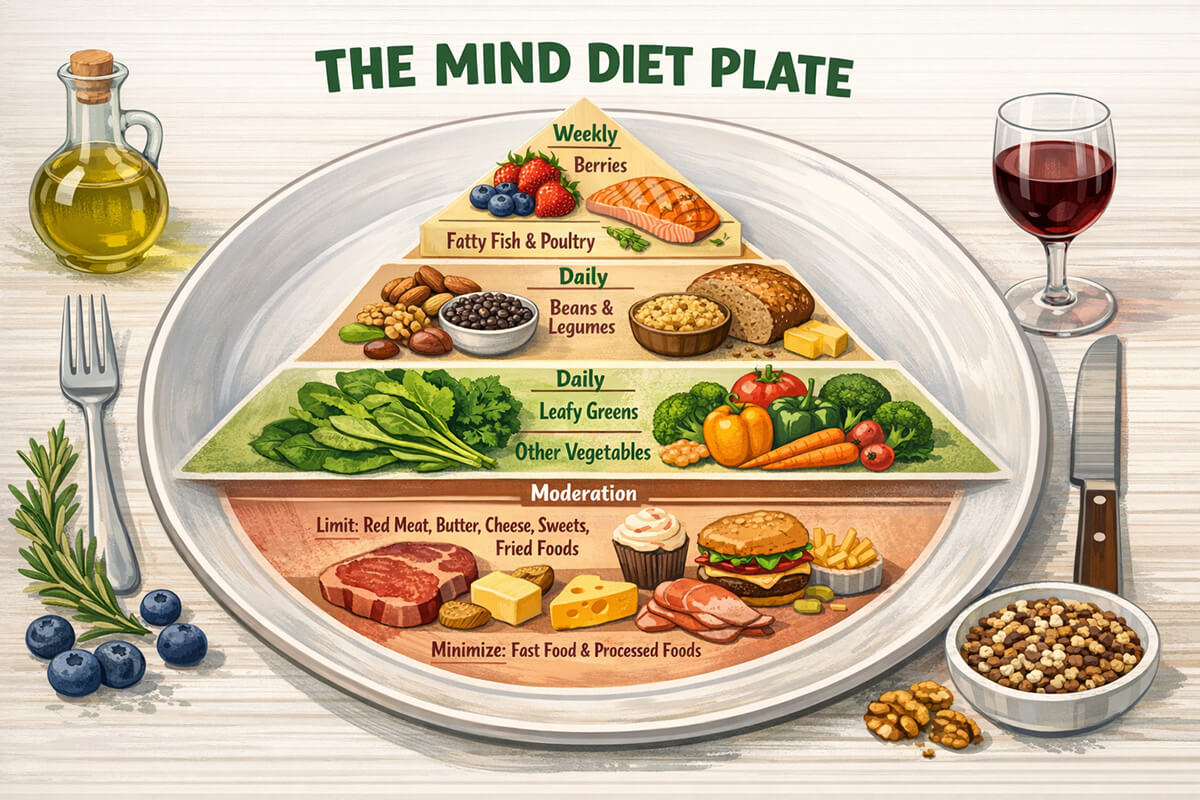
The Mediterranean Diet emphasizes plant-based foods, olive oil, and shared, leisurely meals. Extensive research links the Mediterranean diet to longevity and the prevention of chronic diseases1.
The DASH Diet is an evidence-based eating plan designed to lower high blood pressure and improve cardiovascular health2. It emphasizes nutrient-dense foods rich in potassium, calcium, and magnesium while reducing sodium, saturated fat, and added sugars.
The MIND Diet was specifically designed to protect brain health and reduce the risk of Alzheimer’s and cognitive decline. Most discussions of the MIND Diet focus on leafy greens, berries, and fish, but spices may be one of the most overlooked tools for cognitive health.
Not only do they align perfectly with the diet’s principles, but many spices contain bioactive compounds linked to reduced inflammation and improved brain function. The MIND Diet focuses on reducing oxidative stress, lowering chronic inflammation, and supporting vascular (blood flow) health.
Transitioning from Processed Foods to Whole Ingredients
The biggest failure point of many healthy diets is the perceived blandness of the food compared to unhealthy diets. A typical unhealthy diet is packed with artificial flavors, saturated fats, and other additives used to enhance flavor (and make you crave more).
For people switching from an unhealthy diet, palatability is key. A cucumber and onion salad is a big leap from a salad drenched in creamy ranch dressing, bacon bits, and cheese, served with a diet soda.
Beyond the cognitive benefits of the MIND Diet, healthy eating can cost less than unhealthy eating when you purchase staples, such as dried beans, flour, rice, and potatoes. Processed foods almost always cost more than purchasing individual raw ingredients and building your own meal.
Beyond the cognitive benefits of the MIND diet, healthy eating can also be surprisingly affordable. When meals are built around staple foods, such as dried beans, flour, rice, and potatoes, the cost is often lower than that of processed foods.
Prepackaged products typically cost more because they include additional expenses for processing, packaging, and marketing, whereas using whole ingredients allows you to prepare nutritious meals at a lower cost.
A few years ago, I decided to forgo the $6-a-loaf Italian bread I was purchasing from a mid-sized, national chain of markets. Instead, I decided to teach myself how to make my own Italian bread, which, by the way, tastes much nicer than the store-bought version.

My version contains no dough conditioners, calcium propionate, emulsifiers, or corn syrup. I can make about 4 loaves of bread for about the cost of a single store-bought loaf! The ingredients are simple. Flour, filtered water, yeast, olive oil, a tiny amount of sugar, salt, and sesame seeds.
As you transition into healthier eating habits, you’ll discover there is a host of spices that can not only make your food taste better, but deliver concentrated bioactive compounds that support the very mechanisms the MIND Diet was designed to protect.
Top Spices for Improved Brain Function
Not only can spices support a healthy mind, but they also taste better than the unhealthy flavor enhancers added to many processed foods.
The important thing to consider is that there is no magic ingredient (spice) that can prevent cognitive health. Instead, benefits come from long-term, cumulative dietary patterns.
Most discussions of the MIND Diet focus on leafy greens, berries, and fish, but spices may be one of the most overlooked tools for cognitive health.
Not only do they align perfectly with the diet’s principles, but many spices contain bioactive compounds linked to reduced inflammation and improved brain function.
In a study published in the National Library of Medicine, researchers suggest that Turmeric (curcumin) and saffron are effective as antioxidant and anti-inflammatory therapeutic agents for Alzheimer’s disease, improving cognitive function.
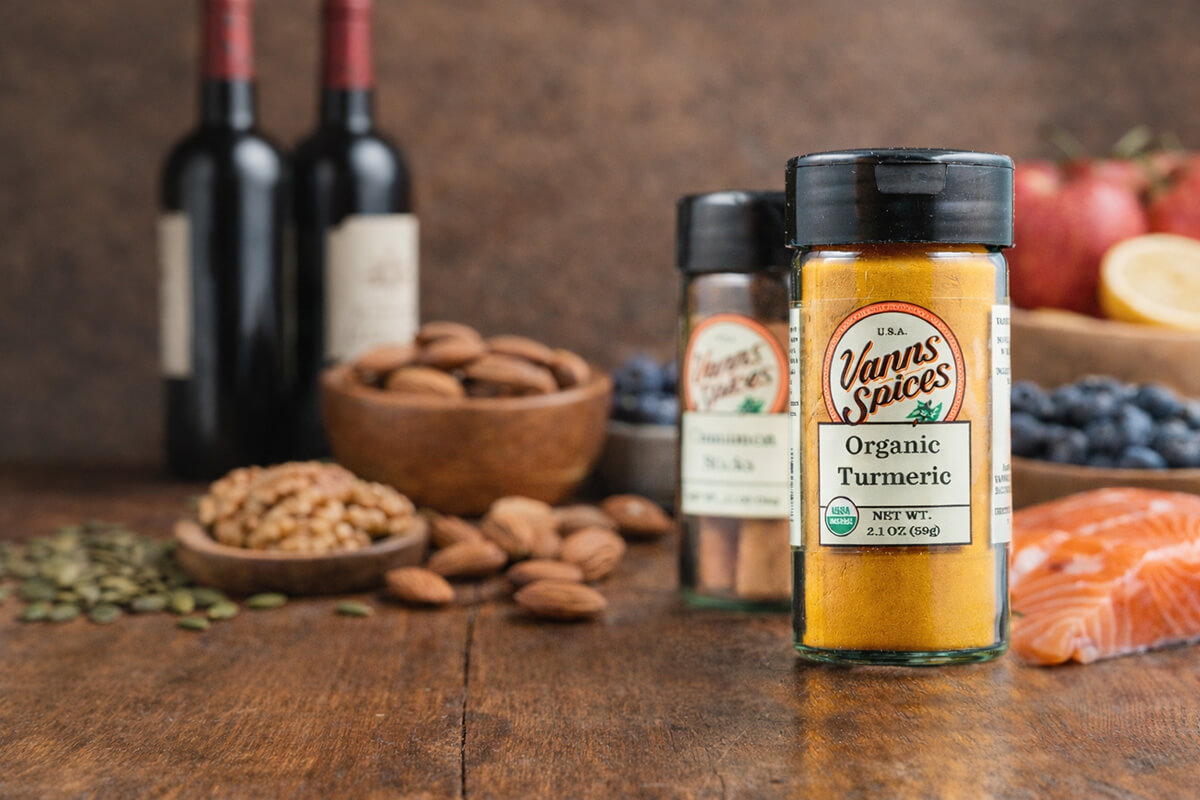
Curcumin is the main active compound found in the spice turmeric. It’s what gives turmeric its bright yellow color, and more importantly, its health-related properties.
Turmeric
Turmeric provides the strongest clinical signal among spices, though its effects are incremental and dependent on formulation and long-term use.
- Active compound: curcumin
- Randomized controlled trials show modest improvements in memory and attention in older adults3
- Linked to reduced inflammation and amyloid plaque buildup4
- Often paired with black pepper for absorption
Saffron
Saffron is one of the few spices with direct clinical evidence in cognitive disorders, not just general health.
- Double-blind randomized trials in Alzheimer’s patients showed significant improvement in cognitive scores vs placebo5
- Trials comparing saffron to drugs demonstrate that saffron performs similarly to standard Alzheimer’s medications6
- Antioxidant and anti-inflammatory
- May protect neurons and improve neurotransmitter balance
- Neuroprotective potency of saffron against neuropsychiatric diseases
Cinnamon (Ceylon)
Cinnamon provides indirect support via metabolic health, but there is no strong clinical proof for cognition itself.
- Very few high-quality human trials specifically on cognition
- Most evidence comes from blood sugar studies and animal/lab models
- Improves glucose regulation7
- Stable blood sugar, which equates to better brain function over time
Rosemary
Rosemary is promising but not well-proven in large clinical trials.
- Some small human studies (often aromatherapy-based)
- More data in lab/animal models
- May influence neurotransmitters
- Antioxidant effects
- Dried rosemary still provides antioxidant and anti-inflammatory benefits and contains polyphenols
Ginger
Moderate evidence for general cognitive support, but not disease-specific.
- Some human studies show an improvement in inattention and cognitive processing8
- Strong anti-inflammatory profile
While only a limited number of spices, most notably turmeric and saffron, have demonstrated direct cognitive benefits in clinical settings, the broader body of evidence supports their role as functional contributors within a healthy diet.
Within the context of the MIND Diet, spices should not be viewed as ancillary ingredients but rather as components that enhance both the diet’s biological impact and practical sustainability.
Spices, a Core Component of Next-gen Food Products
As interest in cognitive health continues to grow, the role of spices is likely to expand, not as niche additives, but as core components of next-gen food products.
 Partner with Vanns Spices
From custom blends to private label, low MOQs, and SQF Certified—start your request today!
Get StartedVanns Spices carries the above-mentioned spices, any of which can be incorporated into a private label program, custom blends, foodservice products, or as part of our co-packing turnkey production for emerging or established brands.
- Turmeric
- Organic Turmeric
- Saffron, Spanish
- Cinnamon Chips
- Cinnamon Sticks
- Organic Cinnamon Sticks
- Cinnamon Sticks, Ceylon
- Cinnamon, Korintje
- Cinnamon, Ceylon
- Organic Cinnamon, Ceylon
- Cinnamon, Saigon
- Organic Cinnamon, Saigon
- Rosemary
- Organic Rosemary
- Ginger
- Organic Ginger
View our entire standard product list.
- Estruch R, et al. (2018). Primary prevention of cardiovascular disease with a Mediterranean diet. NEJM.
- Sacks FM, et al. (2001). Effects on blood pressure of reduced dietary sodium and the DASH diet. NEJM.
- Cox KH, et al. (2015). Curcumin supplementation and cognitive function. Journal of Psychopharmacology.
- Small GW, et al. (2018). Curcumin and brain amyloid/tau in Alzheimer’s disease. AJGP.
- Akhondzadeh S, et al. (2010). Saffron in the treatment of Alzheimer’s disease. J Clin Pharm Ther.
- Farokhnia M, et al. (2014). Saffron vs donepezil in Alzheimer’s disease. Psychopharmacology.
- Allen RW, et al. (2013). Cinnamon and glycemic control: meta-analysis. Annals of Family Medicine.
- Saenghong N, et al. (2012). Zingiber officinale improves cognitive function. Evidence-Based Complementary Medicine.
Ask Alejandro!

Have a question or comment about something you just read? Send me a message and let me know how I can help you.
Message Me